

What is a Stepper Motor Driver? What Does It Do?
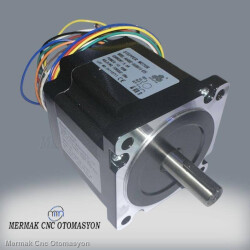
What is a Stepper Motor Driver? What Does It Do? Detailed Explanation
A stepper motor driver is an electronic device that translates digital control signals into precise electrical pulses to control the rotational movement of a stepper motor. Unlike conventional DC motors, stepper motors do not rotate continuously when power is applied; instead, they move in discrete steps. The driver’s primary role is to accurately sequence the current flow through the motor’s windings, ensuring the motor rotates to a specific angular position or at a controlled speed. Without a driver, a stepper motor cannot function effectively, as it requires complex pulse generation and current regulation to achieve its characteristic precise, repeatable motion. This intricate control makes stepper motor drivers indispensable in applications demanding high accuracy and positional control, such as CNC machines, 3D printers, and various automation systems.
The Principle of Stepper Motor Operation and the Driver’s Crucial Role
Stepper motors operate on the principle of electromagnetic fields, having multiple coils (phases) that are energized in a specific sequence to pull the rotor to predefined positions. Each sequence of energizing and de-energizing coils constitutes a “step.” The stepper motor driver is the brain behind this sequence. It receives high-level commands, typically in the form of pulse and direction signals (PUL/DIR), from a microcontroller or CNC controller. The driver then converts these simple signals into the complex, timed current pulses required for each phase of the stepper motor. This precise current control is vital not only for accurate stepping but also for achieving various modes like full step, half step, and especially microstepping, which allows for significantly smoother motion and higher resolution by dividing each full step into smaller increments, thereby minimizing vibrations and improving positional accuracy.
Key Features and Benefits of Advanced Stepper Motor Drivers
Modern stepper motor drivers come equipped with a range of advanced features that enhance performance, efficiency, and reliability. One of the most significant benefits is their ability to provide precise positional control, making them ideal for tasks requiring exact movements. Features like microstepping capabilities enable extremely smooth and quiet operation, reducing resonance and improving surface finish in machining applications. Current control mechanisms, often implemented through chopper circuits, ensure consistent torque across a range of speeds and protect the motor from overheating. Furthermore, many drivers include built-in protection features such as over-current, over-voltage, and under-voltage lockout, safeguarding both the motor and the driver itself. Integrated features like automatic current reduction at idle also contribute to energy efficiency and extended motor lifespan, making them a cost-effective choice for industrial automation.
Exploring Different Types of Stepper Motor Drivers for Optimal Performance
While the fundamental purpose of a stepper motor driver remains the same, there are various types designed to cater to different motor configurations and application requirements. The most common distinction is between drivers for unipolar and bipolar stepper motors. Bipolar drivers are generally more complex but offer better torque per motor size due to more efficient winding utilization. Another critical classification involves the current control method: constant voltage drivers are simpler but less efficient, while constant current (chopper) drivers are prevalent in high-performance applications. Chopper drivers actively regulate the current through the motor windings, ensuring consistent torque and allowing for higher supply voltages, which translates to better high-speed performance. Additionally, drivers can be open-loop or closed-loop; closed-loop stepper drivers incorporate feedback mechanisms (like encoders) to detect and correct positional errors, offering higher reliability and preventing lost steps, particularly in demanding industrial environments where precision is paramount.
Versatile Applications of Stepper Motor Drivers in CNC and Industrial Automation
The precise and repeatable motion control offered by stepper motor drivers makes them indispensable across a wide spectrum of industries and applications, particularly within CNC and industrial automation. In CNC routers, mills, and lathes, they are crucial for controlling the movement of axes (X, Y, Z), ensuring accurate cutting, engraving, and shaping operations. 3D printers heavily rely on stepper motor drivers for precise filament extrusion and print head movement, directly impacting print quality. Robotics, from pick-and-place robots to articulated arms, utilize these drivers for accurate joint positioning. Other significant applications include laser cutters and engravers, automated dispensing machines, textile machinery, medical equipment (e.g., fluid pumps, analytical instruments), camera platforms, and security systems. Their ability to deliver high torque at low speeds and maintain exact positions without feedback (in open-loop systems) or with enhanced reliability (in closed-loop systems) makes them a go-to solution for intricate motion control tasks.
Selecting the Ideal Stepper Motor Driver for Your Project
Choosing the correct stepper motor driver is critical for the success and efficiency of any motion control system. Several key factors must be considered to ensure optimal performance and compatibility. Firstly, match the driver’s maximum current output to the rated phase current of your stepper motor; insufficient current will lead to reduced torque, while excessive current can damage the motor. Secondly, consider the supply voltage requirements; higher voltages generally allow for better high-speed performance. The desired microstepping resolution is also crucial, as it directly impacts motion smoothness and positional accuracy. Furthermore, evaluate the driver’s interface (e.g., PUL/DIR, SPI, UART) for compatibility with your control system. Environmental factors such as operating temperature and vibration resistance should also be taken into account, especially in industrial settings. Finally, look for integrated protection features to enhance the longevity and reliability of your entire setup. Consulting with experts or referring to detailed product specifications is always recommended for complex applications.
MERMAK CNC Difference: Advanced Stepper Motor Solutions
At MERMAK CNC, we understand the critical role that high-quality stepper motor drivers play in achieving superior performance in CNC and automation systems. Our range of advanced stepper motor drivers, such as the MM-Series High-Performance Stepper Drivers, are engineered to deliver unparalleled precision, reliability, and efficiency. We leverage cutting-edge technology to provide solutions that offer ultra-smooth microstepping, robust current control, and comprehensive protection features, ensuring your machines operate with maximum accuracy and minimal downtime. MERMAK CNC’s commitment to quality extends beyond our products; we provide exceptional technical support and expertise to help you integrate our solutions seamlessly into your projects. Our advanced automation components are trusted by professionals globally, with extensive international sales reinforcing our reputation for excellence. For all your detailed requirements, technical inquiries, or to discuss our comprehensive range of automation advantages, please do not hesitate to contact us directly via WhatsApp at +905346585401. Let MERMAK CNC empower your next innovation with precision and reliability.
What is a Stepper Motor Driver? What Does It Do? FAQ
1. What is a Stepper Motor Driver?
A stepper motor driver is an electronic device that converts high-level control signals (like step and direction pulses from a microcontroller or PLC) into the precise electrical currents required to energize the windings of a stepper motor. It acts as an intermediary, enabling accurate and controlled movement of the motor by sequentially switching the current in its coils.
2. How does a Stepper Motor Driver work?
Stepper motor drivers work by controlling the current flow through the motor’s coils in a specific sequence. When the driver receives a “step” pulse, it changes the current state in one or more motor windings, causing the motor’s rotor to move a single step. The “direction” signal determines whether this step is clockwise or counter-clockwise. Advanced drivers use techniques like microstepping and constant current control to ensure smooth, precise, and efficient operation.
3. Why do I need a Stepper Motor Driver? Can’t I connect the motor directly?
You cannot connect a stepper motor directly to a standard power supply or microcontroller. Stepper motors require precise sequencing of current to their multiple coils to rotate. A driver provides this essential sequencing, current regulation, and often voltage amplification to power the motor effectively. Without a driver, the motor would either not move, move erratically, or draw excessive current, potentially damaging your control circuit.
4. What are the main types of Stepper Motor Drivers?
Stepper motor drivers primarily come in two categories: voltage-mode and current-mode. Current-mode drivers, especially constant current chopping drivers, are far more common and preferred for their ability to maintain consistent torque and reduce resonance. They can also be classified by their control method (e.g., full-step, half-step, microstepping) and the number of phases they support (e.g., 2-phase, 3-phase).
5. What is microstepping and why is it important?
Microstepping is a technique used by stepper motor drivers to divide each full step of a stepper motor into smaller, more precise increments. Instead of fully energizing coils in sequence, microstepping drivers apply varying, proportional currents to the coils. This results in smoother motion, reduced vibration and noise, and significantly increased positional accuracy. It’s crucial for applications requiring fine resolution and quiet operation, like 3D printers and CNC machines.
6. How do I choose the right Stepper Motor Driver for my application?
Selecting the right driver involves considering several factors: the motor’s rated current and voltage, the required microstepping resolution, the desired maximum speed, and the power supply voltage available. Ensure the driver’s maximum output current and voltage are equal to or greater than your motor’s requirements. Also, consider features like thermal shutdown, overcurrent protection, and ease of configuration (e.g., DIP switches vs. software configuration).
7. What is current control in Stepper Motor Drivers and why is it essential?
Current control, often implemented through “chopping,” is a vital feature in modern stepper motor drivers. It regulates the current flowing through the motor windings by rapidly switching the voltage on and off at a high frequency. This ensures that the motor receives a constant, precise current, regardless of back EMF or winding inductance. Essential for maintaining consistent torque across different speeds, preventing motor overheating, and optimizing efficiency.
8. Can I use a Stepper Motor Driver with any Stepper Motor?
No, not with “any” stepper motor. While many drivers are versatile, you must match the driver’s current and voltage capabilities to your specific stepper motor. An undersized driver won’t power the motor effectively, while an oversized driver might not be cost-efficient or could potentially damage the motor if not configured correctly. Always check the motor’s datasheet (rated current, voltage, inductance) and compare it with the driver’s specifications.
9. What are common applications for Stepper Motor Drivers?
Stepper motor drivers are ubiquitous in applications requiring precise position control. Common uses include 3D printers, CNC milling machines, laser cutters, robotics, laboratory automation equipment, textile machinery, camera platforms, hard disk drives, and even some automotive applications for controlling valves or dashboards. Anywhere precise, repeatable motion is needed, a stepper motor and its driver are likely at work.
10. How do I connect a Stepper Motor to its Driver?
Connecting a stepper motor to its driver typically involves wiring the motor’s coil pairs to the driver’s output terminals (often labeled A+, A-, B+, B- for a 2-phase bipolar motor). The driver then receives power from an external DC power supply and control signals (Step, Dir, Enable) from a microcontroller or PLC. Always refer to both the motor and driver datasheets for exact wiring diagrams, as configurations can vary.
11. What are common issues or troubleshooting tips for Stepper Motor Drivers?
Common issues include motor stalling, skipping steps, overheating, or erratic movement. Troubleshooting tips involve: 1) Verifying power supply voltage and current, 2) Checking motor wiring for correct phase connection and shorts, 3) Ensuring control signals (Step/Dir) are clean and within specifications, 4) Adjusting the driver’s current limit to match the motor, 5) Checking for mechanical binding in the system, and 6) Ensuring proper heat dissipation for the driver.
12. What is the difference between open-loop and closed-loop stepper systems?
In an open-loop stepper system, the driver sends pulses to the motor, assuming each pulse results in a step, without any feedback on the motor’s actual position. It’s simpler and more cost-effective. A closed-loop stepper system, also known as a servo stepper, incorporates an encoder on the motor shaft to provide real-time position feedback to the driver. This allows the driver to correct for missed steps, maintain higher torque, and achieve greater accuracy and efficiency, similar to a servo motor.
13. What are the key specifications to consider when buying a Stepper Motor Driver?
Key specifications include: 1) Input Voltage Range: Must match your power supply. 2) Output Current per Phase: Must meet or exceed your motor’s rated current. 3) Microstepping Resolution: Defines the smoothness and precision (e.g., 1/16, 1/32, 1/256). 4) Control Interface: Typically Step/Dir, but can also be SPI or UART. 5) Protection Features: Overcurrent, overtemperature, undervoltage lockout. 6) Heat Dissipation: Adequate heatsinking or fan recommendations for the driver’s intended load.
14. How do Stepper Motor Drivers handle motor resonance?
Stepper motor drivers mitigate resonance (vibrations that can cause noise, reduced torque, and missed steps at certain speeds) primarily through microstepping. By dividing full steps into smaller increments, microstepping smooths the motor’s movement, reducing the abrupt changes in torque that lead to resonance. Some advanced drivers also incorporate anti-resonance features, which dynamically adjust current waveforms to dampen vibrations at critical speeds, further improving performance and quietness.
15. Can a single driver control multiple stepper motors simultaneously?
Generally, no. A single stepper motor driver is designed to control one stepper motor. Each motor requires its own set of precisely sequenced current pulses to its windings. If you need to control multiple stepper motors, you will typically need one individual stepper motor driver for each motor. These multiple drivers can then be controlled by a single microcontroller or PLC, which sends independent step and direction signals to each driver.